For Nature

Wondrous are the Colorado landscapes, which so often call to me and invite me to explore. The peaks, the crisp mountain air, the aspen trees, the raw beauty of it all. I remember the first time this word came to mind as a descriptor of the landscape surrounding me. I was climbing to the peak of a mountain that stood magnificently at 14,000 feet. As I finished my ascent, exhausted and gasping for oxygen, knowing very well that there would be none, something else took my breath away. My jaw dropped and my eyes filled with tears. I contemplated the landscape in awe as I so desperately tried to take in every last bit of it. The sun shone lightly past a feathery cloud, gently kissing my face and warming my soul. That’s when I realized my love for her. For Nature.

Ethereal are the red and golden leaves that dance in the breeze, slowly floating down and embracing me with their remaining summer warmth. As I walked down the street decorated with thousands of amber and scarlet canvases, my heart filled with joy after every step. How could it be possible for something so beautiful to exist, and how had I been lucky enough to be alive to witness it? I didn’t have answers to these questions. But I thanked the universe for life. And I thanked the universe for her. For Nature.

Misery overwhelmed me when I was not near her. Trapped by the walls of my room drove me to insanity. I craved to be with her, to feel the sunshine on my skin and the breeze blowing through my hair. Why couldn’t I enjoy her company all the time? Why did I have to leave her at night when she put on a beautiful display of twinkling diamonds for everyone to observe? Her art was mesmerizing, every little thing she made was magical. From her fiery paintings on the trees to her sparkling diamonds in the sky. I wanted to observe her displays, to appreciate her beauty. But as I stepped outside, she grew shy and stopped showing me her art. The canvases on the trees remained green longer, then deteriorated to a lifeless brown when an unexpected snow fell. And the diamonds? Well, they began to fade, covered by a dirty film which she was not familiar with. She didn’t know what to do. She fought, painted more passionately, polished her diamonds, but her efforts were useless. I watched her fight and I wanted to protect her. Wanted to fight for her. For Nature.

Unbearable was the pain that I felt when I learned that they had hurt her. I couldn’t understand why. She was so beautiful, so pure. And us? So damaging, so undeserving. I felt hopeless as the black poison seeped through her veins killing her slowly. I was in despair as they tore her limbs in attempts to clear land for our use. But was it worth it? The pain, the suffering, was it worth it? I… no… we needed her. So why did we hurt her? Why did we destroy her? I couldn’t find an explanation. Could it be that I was the only one who admired her beauty? Could it be that I was the only one that recognized her pain, felt what she felt, as they brutally tore her apart? Why are they hurting her? Why, oh God, why? I wanted to stand up for her. To protect her. But there was little I could do for her. For Nature.

Strenuous were my efforts to protect her. I heard her cries for help and witnessed as they continued to harm her, so I did everything in my power to stop them. They asphyxiated her, filling her lungs with lethal gases, muddling her existence with filthy clouds of toxins. They drained the life out of her, the life that she so generously shared with us, the life that kept us alive. I did all I could to put a halt to it. Tried to change my behavior and inspired others to follow suit. But there were too many of us, and our efforts were overshadowed by those who didn’t care or didn’t see value in trying. I could not do enough. So they continued to harm her and I continued to cry and continued to try for my beloved. Our beloved. We tried for her. For Nature.

Treacherous were those who knowingly hurt her, as were those who stood idly by. Some showed blatant disregard while others tried to bear the entire weight of her pain. But it didn’t matter. We were all to blame. Even though I loved her, I also hurt her. My mere existence became deadly to her, no matter how hard I tried to keep her safe. My every breath was like a knife to the chest, while all she did was give me life. I tried to change but no matter what I did I inflicted pain on her. I wanted to care for her. For Nature.

Courage was what I needed to carry on. Her pain became mine, and though I knew my efforts were futile, I persisted. I swam against the current in the continual struggle for her well-being. I fervently opposed those who did not show compassion for her. It did not matter if I was standing alone, because if no one else showed her love, I knew I needed to. It did not matter if no one else fought with me, as long as I had done my job to tend for her, right?  She was worth all the effort, and I would not give her up without a fight. I would make a change for her. For Nature.

Heartache tore through me as her condition worsened. I thought we were headed down the right path. But it wasn’t enough.I’m sorry, but the overly celebrated attempts to enact positive change were not enough. She needed time, and she needed care, but we did not act fast enough and we did not care deeply enough. The facade masking our neglect needed to be torn down, and she began to demolish it as the pain became unbearable. Did we really think that we could do so little to stop so much pain? We needed to act quickly and we needed to act passionately for her. For Nature.

Agony filled my body as I realized it was too late. I read the headlines warning of impending doom, not just for her, but for us, too. We could’ve saved her, could’ve saved ourselves. She gave us so many signs, she cried for help but we failed to listen. Blatantly ignored as she implored for us to change our ways. But we refused.  How had I let this happen to my love? I couldn’t stand to watch her suffer, but I had to remain hopeful for her. For Nature.

Negligent were all of the people who had the power to keep her safe. The powerful men in suits refused to acknowledge her pain. They valued money over her well-being. We fought, spoke for her as she lost her voice. Some of us rose to power in attempts to change the course of her future, but the money always won. They didn’t care about her. They only cared about the wealth she provided as they exploited her beauty. They took advantage of her, abused her when they should have cared for her. For Nature.

Gone we will be when she takes her final breath. She has tolerated so much pain, so much suffering, but we do not care. We continue to take from and to kill the beautiful one who has given us so much, from the air we breathe to the clothes on our backs. Everything. But as she fades away, so do we. Slowly and painfully, as our last breaths become more and more difficult. I never would have imagined that the air itself would be the thing to take my breath away. So polluted, so toxic. We killed her. We didn’t care for her. For Nature.

Envision the worst case scenario, and take action to avoid it. Our future can still be bright, we can still have a better tomorrow. Her final days are near, but in our hands we have the power to avoid the torment which may soon be inevitable. We must change. We must encourage others to care, encourage them to join the fight before it’s too late. So I urge, no, I beg you to be the change. Our way of life will no longer be sustained. We must change. For us. For her. For Nature.
Seeking Refuge from the Future

A single tear rolled down my face as I sat on the bus leaving the small municipality of Jerez in the Mexican state of Zacatecas, the only place that I had ever called home. I felt the warmth of my mother sitting next to me, her finger softly grazing my cheek, wiping the tear away. “Todo va a estar bien, mija,” she would reassure me, reminding me constantly that our trek north was for the best, a fact that my six-year old self could not yet recognize. We had everything — a nice house, good food on our plates, warm clothes on our backs — so why did we have to pack up and leave?

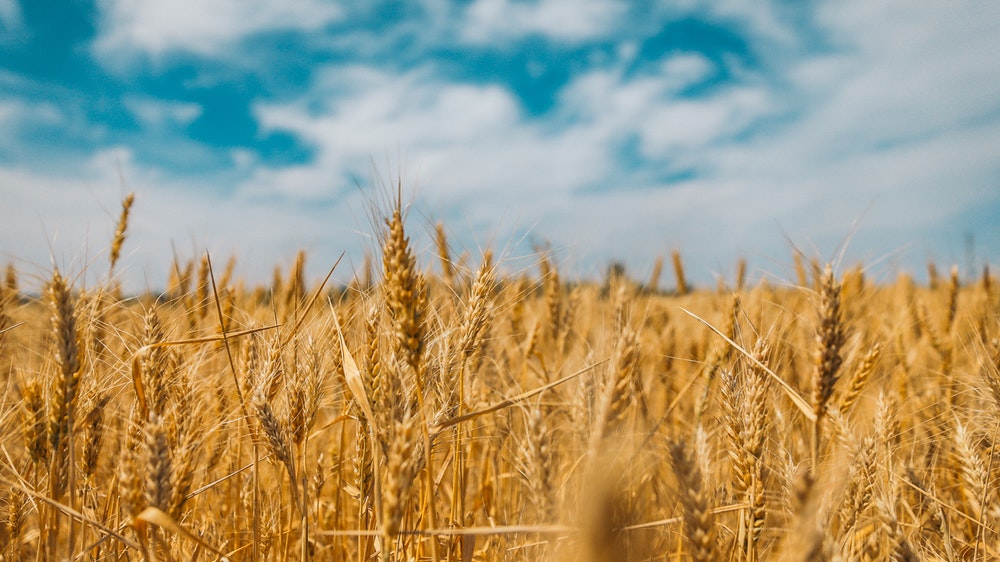
My heart continued to break as the bus escaped the mountainous terrain of my beloved Zacatecas. Soon I would no longer see the beautifully lit churrigueresque church which occupied the city center of my charming town. I would not hear the lively music on Sundays, and I would not feel the infectious happiness everyone in Jerez possessed. Soon all of this would be but a memory. In what felt like seconds, we left the Sierra Madre Occidental behind, and entered into a landscape that I had never seen before. Looking out the window, I saw miles and miles of open land covered by a fawn colored blanket of a plant I did not recognize. The unidentifiable plants swayed in the soft breeze. What were these mysterious plants? Where did they come from? Who put them there? For a moment this image, and all of my questions, soothed me, until I realized that the weeds were moving as if waving goodbye. My eyes then fixated on the horizon, and as my visibility expanded further than I could have ever imagined, tears fogged my sight, leaving all of my questions about this novel landscape unanswered.

Most of Mexico’s land has been historically used for agriculture. As of 2015, it was estimated that nearly 55% of Mexican land was used for husbandry, most of it being arable land worked to grow crops.¹ The country’s very diverse climate and topographical regions allow for the growth of various types of crops throughout the 31 states that make up the republic. The southern states, with a wet tropical climate and lush, green forests, grow sugarcane, oranges, and coffee.⁵ As you travel north and the climate becomes more temperate in the states of Jalisco, Guanajuato, Querétaro, Zacatecas, San Luis Potosí, and others, you begin to see vast fields of sorghum and corn, crops with which I was very familiar growing up in this region.⁵ In the northernmost states, the climate becomes dry and warm. With a yearly average of 16 inches of rain, most of which falls during the wet season between the months of July and September, the desert landscape of the border states is ideal for growing wheat⁵ the mysterious crop which had caught my eye that fateful day.

“Immigration is a vessel for opportunity.”  The words of my third-grade teacher echoed in my head after learning about the concept of the American Dream. We learned that people, both citizens and immigrants, strongly believed that they could achieve success and prosperity by working hard. As I reflected on my life in Mexico, I recognized that this was the exact reason why my mother decided to start our lives over in the United States. Sure, Jerez was a beautiful town, full of life and happiness, but it was not  particularly a place of progress, and the only upward mobility was that of people physically climbing up the cerro. While we had everything we needed in Mexico, she wanted to make sure that I could create the future that I wanted. She wanted me to be able to grow into a better, more ambitious person and pursue whatever dreams I may have. My mother knew that we needed to live in a place where progress was expected, not simply hoped for. Understanding the logic of the reason for our move gave me peace of mind, and regardless of how how much I struggled to adapt to this new life, I knew then that she had been right all along, “todo va a estar bien.”

Just as progress requires certain societal conditions to develop, wheat needs particular conditions to grow. A general guideline is that wheat can grow in conditions that are comfortable for humans, which means temperatures ranging from 20 to 23 degrees celsius. In terms of water consumption, wheat requires anywhere between 12 to 15 inches to grow a good crop. Wheat is a winter crop, and it is planted in October following the rainy season of Northern Mexico, and harvested in June. Though these 9 months are the driest in the region, the crops receive enough water in this time period to grow plentifully.⁵ Furthermore, this particular crop does better in places with low humidity, since a lot of diseases that target this plant thrive in high-moisture environments.⁴ Though these growing conditions are so specific, they fit perfectly with the climatic conditions of Northern Mexico, making it easy for this crop to be grown efficiently and in high quantities in the area, which was evident by the field with which I had stumbled upon during my heartbreaking move to the United States

Growing conditions are very easily met now, but the predicted effects of climate change pose a significant threat to such a staple crop. Recent studies conducted by the peer-reviewed Nature Climate Change journal reveal that a 1 degree celsius increase in global temperature could lead to a decrease in wheat production between 4.1% and 6.4%.⁴ The same studies predict that on average, we can expect a “3.9% yield reduction per degree of global temperature increase,” in the coming years.⁴ This is particularly alarming since global demand for food is expected to increase by “between 59 and 98%” in the next two decades.³ To make matters worse, worldwide temperature averages are not going to increase just by 1 degree celsius, in fact a 1 degree celsius increase in temperature is not even the low estimate. According to the Intergovernmental Panel on Climate Change, the best estimate for the low scenario of global temperature increase is 1.8 degrees celsius,⁶ which could bring by catastrophic changes in sea level rise, natural disasters, disease, and food insecurity.²

It is estimated that by the year 2050, there will be 10 billion mouths to feed on Earth, but with decreasing yields for staple crops, such as wheat, the degree to which we can actually accomplish this is questionable.³ Even with nearly 2 billion less people in the world now, there are still millions of people starving, a number that will only continue to increase, as agricultural production becomes less and less plentiful in an increasingly hostile world.

The year is now 2040, and I sit in my vehicle driving across the Mexican Plateau. The plateau that used to be covered in wheat fields that expanded for miles, the same plateau that my mother and I crossed years ago as we escaped Mexico in search of a better life. My two beautiful children sit in the backseat, looking out the window as inquisitively as I had when I was their age. My hands grip the steering wheel and my eyes fixate on the horizon as I try to hide the excitement of visiting my hometown after so many years. My mother sits in the passenger seat next to me, looking astonished at the change in scenery. “Ay, como han cambiado las cosas” she says to me. The phrase echoes in my head, “oh, how have things changed.” The excitement fades, and I grow increasingly angry at the implication of this phrase. It’s almost as if she thought that this change was normal, almost as if things had changed willingly and had not been violently forced to adapt to our careless actions. I brush it off, she’s old, she doesn’t know any better. My youngest child points out the open window to an ominous cloud looming over the horizon. “What’s that, mommy?” she asks. Looking through the rear view mirror I identify the cloud as a sandstorm. I couldn’t believe it. “Roll the window up, honey. Quick” I tell her, trying to remain as calm as I possibly could as I tried to process the fact that we now lived in the post-apocalyptic world that had been depicted time and time again in all of those science-fiction movies I watched as a kid.

As we drove into Jerez, the small town that I had such vivid memories of, I noticed everything had changed completely. The churrigueresque church was no longer beautifully lit, and instead was crumbling at our feet. The streets that used to bustle with life had become barren, and the only people who remained walked with a grim expression on their faces. What had happened to this place? This is not how I had imagined my town when first visiting with my kids. I wanted them to see the life and charisma of my hometown, the town I loved so much. From a distance we heard a shout, “Doña Yolanda!” We turned to see an old family friend who quickly approached and welcomed us in a warm embrace. As my mother and her friend caught up, I couldn’t help but think of how terrifying it must have been to witness the changes firsthand. The shock, the grief took over me, and soon enough I was in tears. “What’s wrong, mommy?” my youngest asked me. I pulled her in for a hug, “mommy’s ok, go play with your brother.” As she scurried away, I wiped the tears away and turned to my mom’s friend, and interrupting their laughter I asked, “what happened to this place?”

Shocked by the question, he stayed quiet for what seemed like an eternity. I repeated the question, this time with a demanding tone. I needed to know. “Don’t you know?” he finally responded, “the crops gave out. Nothing grows here anymore. People escaped North because they couldn’t keep their families alive. Figured if anyone had food it would be the Americans.” I was in disbelief. I knew very well this would not be contained to Jerez, it would not be contained to Mexico. Soon, my own children would suffer the consequences of our actions, even if they lived in the United States. We could’ve done something… How had we ignored so many warning signs?  How was I supposed to let my children die because of our mistakes? I was visibly distraught as my mother pulled me in for a hug trying to comfort me. A tear ran down my face, and her old finger softly grazed my cheek wiping the tear away. “Todo va a estar bien, mija” she would reassure me, except this time I didn’t believe her.


References:

  1. “Agricultural Land (% of Land Area).” Agricultural Land (% of Land Area) | Data, The World Bank, 2015, data.worldbank.org/indicator/AG.LND.AGRI.ZS?locations=MX.
  2. Allen, Myles, et al. “GLOBAL WARMING OF 1.5 °C.” Intergovernmental Panel on Climate Change, 6 Oct. 2018.
  3. Cho, Renee. “How Climate Change Will Alter Our Food.” State of the Planet, Columbia University , 27 July 2018, blogs.ei.columbia.edu/2018/07/25/climate-change-food-agriculture/.
  4. Liu, Bing. “Similar Estimates of Temperature Impacts On Global Wheat Yield by Three Independent Methods.” Nature Climate Change, 12 Sept. 2016.
  5. “Major World Crop Areas and Climatic Profiles.” United States Department of Agriculture , 1996.
  6. “Projections of Future Changes in Climate.” Projections of Future Changes in Climate – AR4 WGI Summary for Policymakers, Intergovernmental Panel on Climate Change, 2007, http://www.ipcc.ch/publications_and_data/ar4/wg1/en/spmsspm-projections-of.html.

Hurricane Season: Denial in the Wake of Disaster

irene

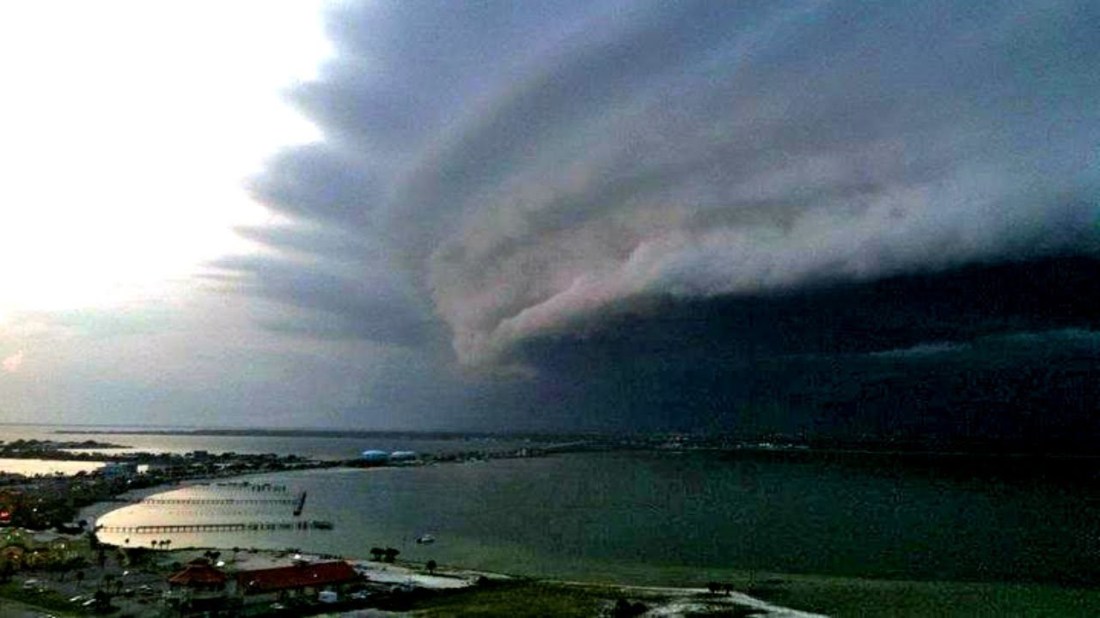
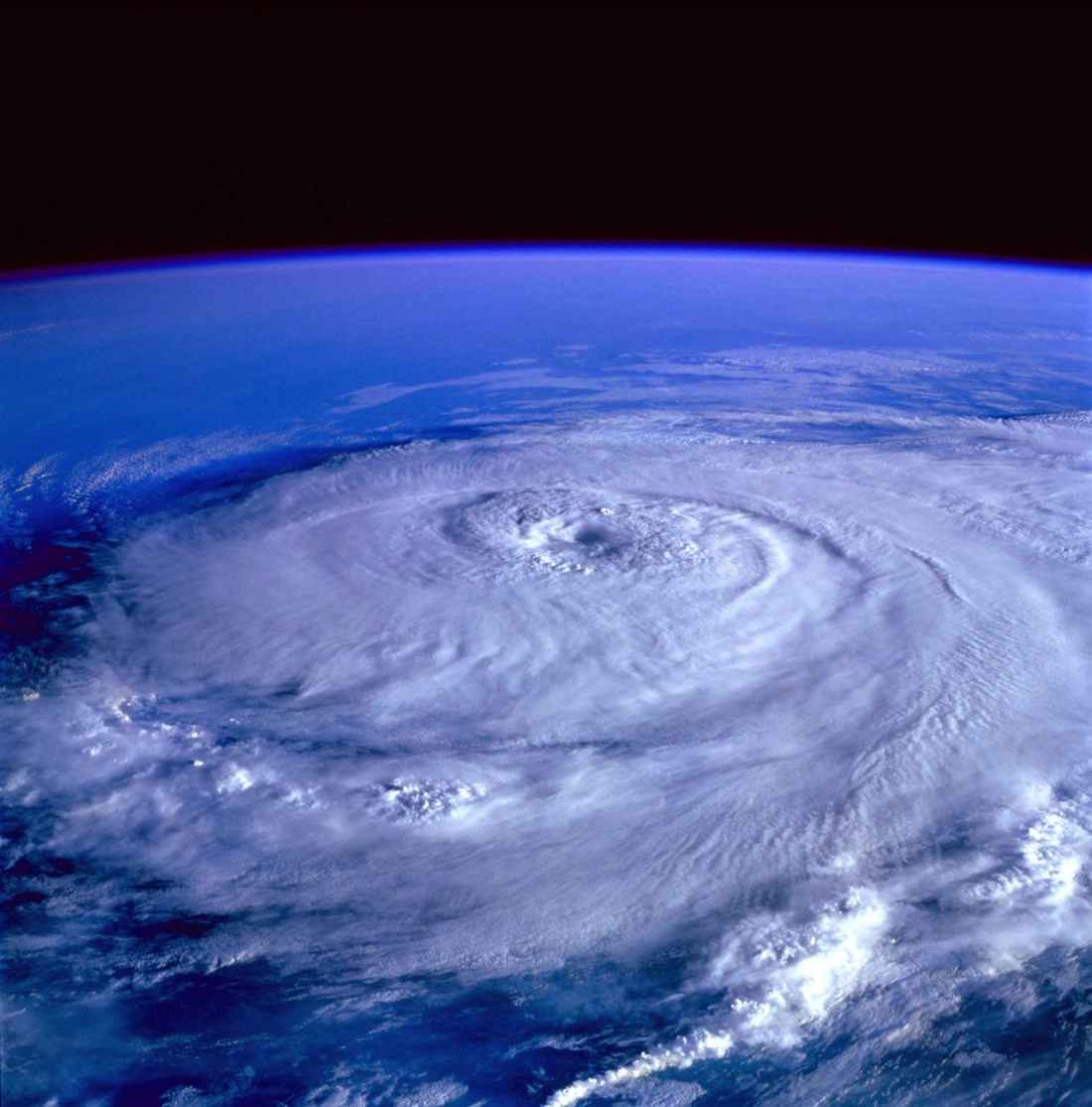
Ominous clouds loom over the horizon as ferocious winds tear trees from the ground. Heavy rains ensue and violent waters invade the streets, the same streets that are usually bustling with life. The storm surge takes its toll as the remaining life is stripped away, water seizing every vacant spot in homes and bodies. Katrina, Harvey, Irma, Jose, and now Florence. This story is not unknown to us, and the impacts of storms like these are becoming costlier and deadlier.

harvey

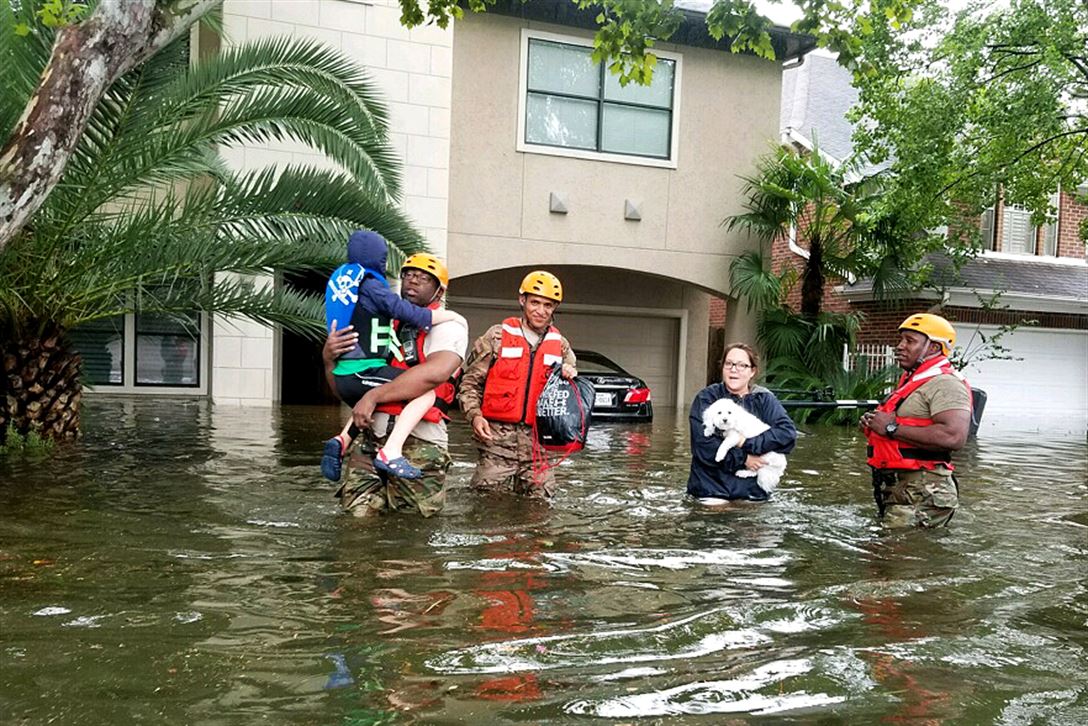
In 2017, Hurricane Harvey made landfall in southern United States, affecting primarily Texas and Louisiana. The storm hit particularly hard in the Houston metropolitan area, as the flat lands were overcome by floods and people were forced onto their rooftops, anxiously waiting for help that rarely arrived. First responders, overwhelmed with calls, worked tirelessly to rescue as many people as possible, but the lack of an evacuation order from city and state officials left most of the Houston population stranded in the flooded city struggling for their lives. Was Mayor Turner unaware of the threats that a category 4 hurricane posed to his beloved Houston? Or was he looking to redefine ‘southern hospitality’ by welcoming Harvey with open arms?

houstonbayous

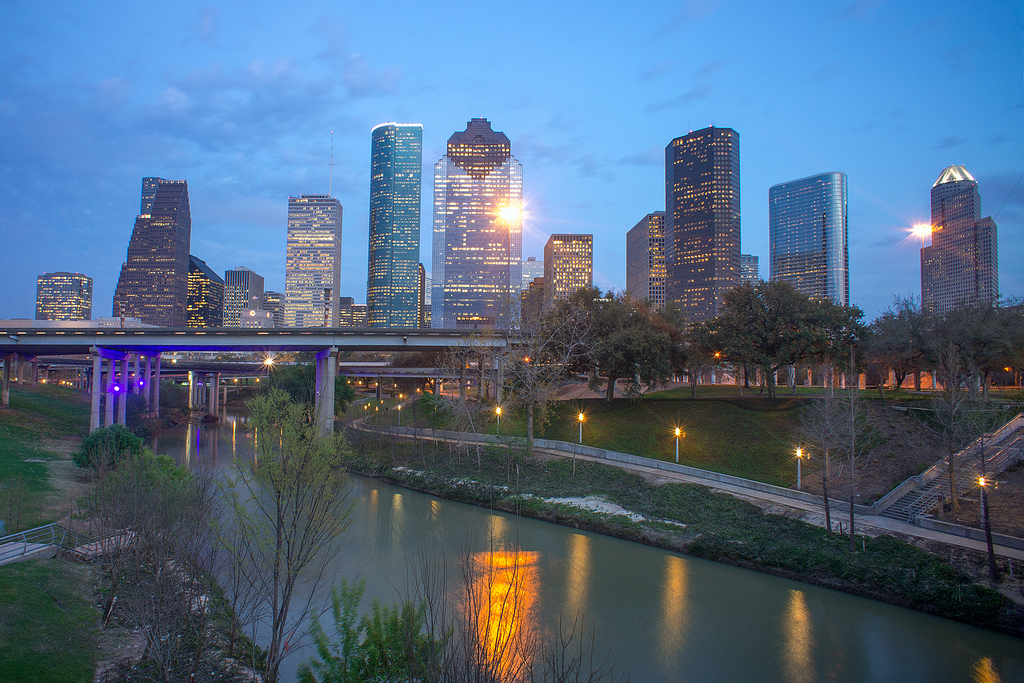
Houston, lovingly nicknamed “Bayou City” because of the various waterways that run through the metropolis, is conveniently located in flood-prone terrain. What were once flood plains turned into flooded suburbia in the presence of Harvey and other major storms. But this did not come as a surprise to scientists and engineers familiar with the Houston area. Phil Bedient, an engineering professor at Rice University and co-director of the Storm Surge Prediction, Education, and Evacuation from Disasters (SSPEED) Center, claims that Houston has no protection against disastrous flooding, the city is a “sitting duck,” and it is no longer a matter of if flooding will occur, but rather when.⁶ Regardless, Houston is not prepared, which became evident when confronted with Harvey.

harveyhouse.JPG

The natural composition of coastal Texas is bad enough. Low-lying terrain composed of slow draining clay calls for careful planning in development to avert crisis, which was absent in the most recent urban expansions.⁶ With unprecedented growth and urbanization, Houstonians resorted to developing inside reservoirs originally designed to alleviate flooding.³ Poor city planning coupled with massive floods and the lack of an evacuation order created the perfect storm. Houston incurred an estimated total cost of 125 billion dollars and 82 fatalities.⁵ That is 125 billion dollars and 82 deaths too many. Catastrophe was maximized, even though many steps could have been taken to prevent it.

florence

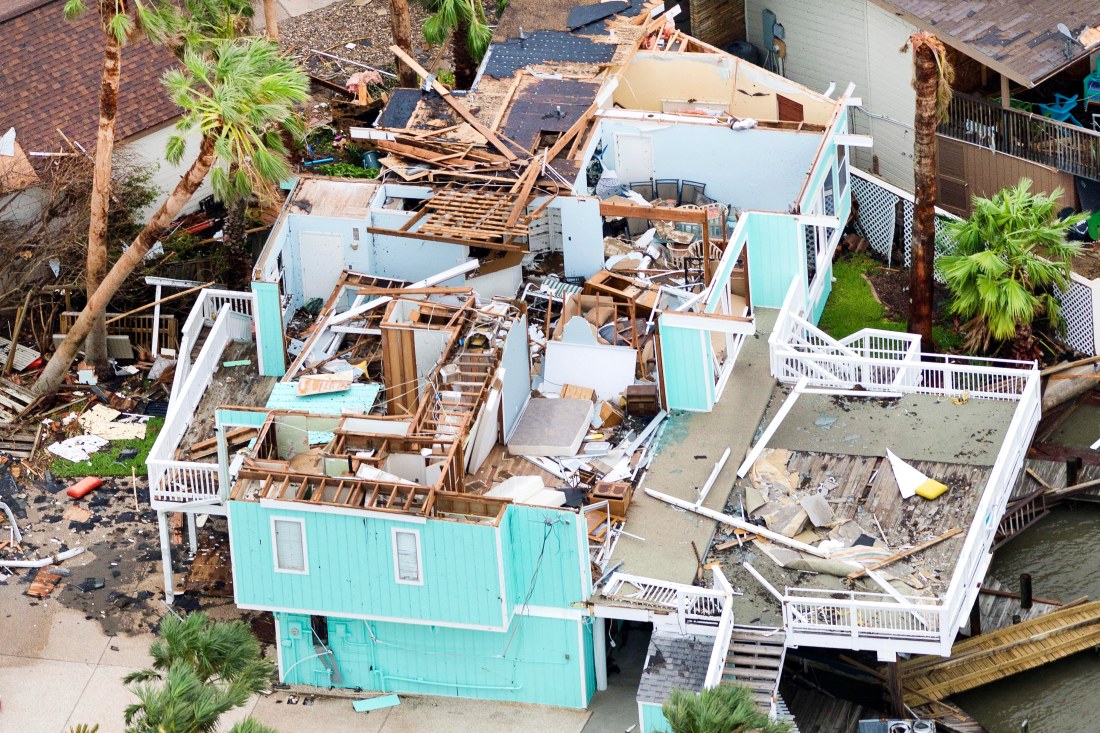
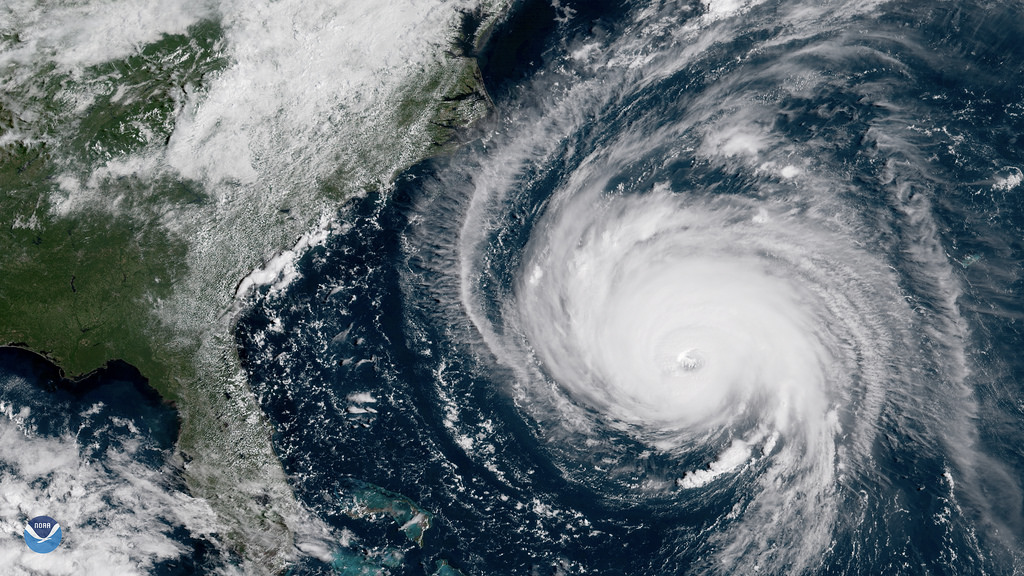
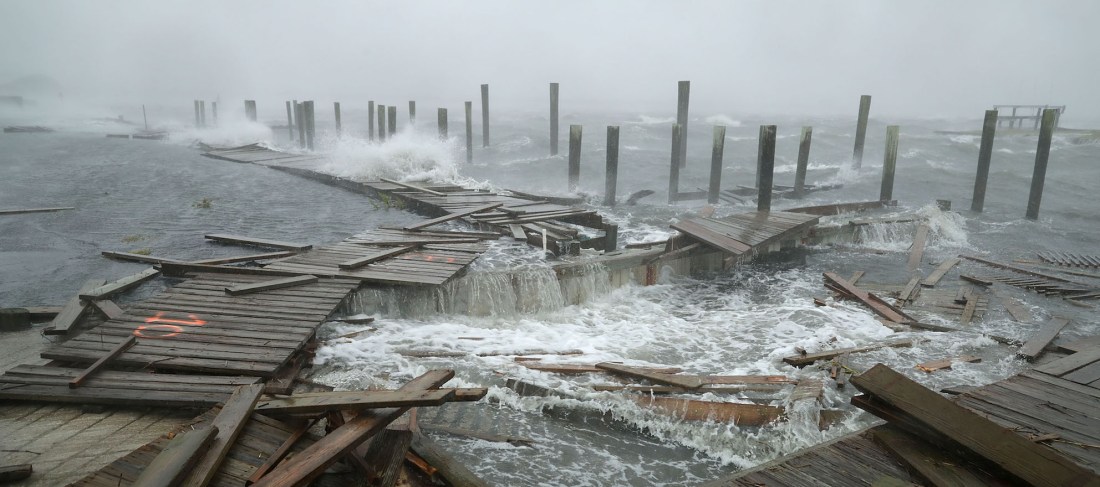
But the story of Houston and Harvey is not unique. A more recent example of our blatant disregard for warning signs has come in the form of another hurricane. Hitting further east in continental United States, hurricane Florence has devastated the Carolinas. Though geographic circumstances are much different, infrastructural damage during Florence has been comparable to that of Harvey. An early estimate showed that the states affected by Florence could incur a total cost of at least 170 billion dollars, which would make it the costliest hurricane in the history of this country.²

florence2

As hurricane Florence continues to develop, no one knows exactly what damages Virginia and the Carolinas will be left to clean up, but it is not looking pretty. So far there are at least 18 people dead and approximately 740,000 homes and business without power, and though the hurricane has been downgraded to tropical depression, flash flooding and tornadoes are still imminent threats.² As outsiders observe this catastrophic event, the inevitable question arises: could the damages have been prevented? The answer is, without a doubt, yes.

The actual occurrence of these destructive events is beyond human control, but actions toward minimizing casualties, both in human lives and monetary form, can and should be taken. But how could the east coast, specifically North Carolina, have minimized the impacts of devastating events such as Florence? For starters, they could have avoided developing in vulnerable coastal areas that were susceptible to rising sea levels, a piece of advice that scientists have been practically shouting at policymakers for years now. But “for the sake of business,” North Carolina’s House Bill 819 passed favoring development.⁴ What these clever developers did not realize was that their short-term economic profit would turn into a long-term disaster with expected sea-level rise and stronger tropical storms wreaking havoc on their precious gold mine.

Climate-change-deniers-demonstrating

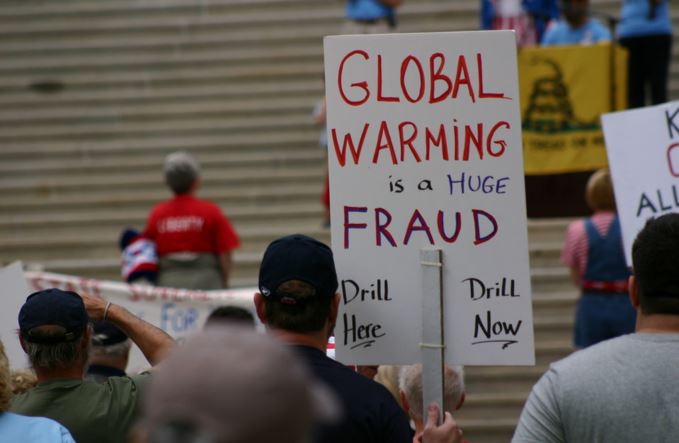
We could go on and on about these natural disasters, what could have and probably should have been done to prevent the damage, but lamenting the past will not safeguard the future. As of late, our tendency to disregard scientific evidence of impending threats has gotten us into trouble. Even though people are living through these disasters and experiencing firsthand the dire consequences of science denial, their votes are continuously putting climate denying public servants into office. By giving these “business oriented” officials the mandate, the people of these states continue to jeopardize their lives. As the Earth’s climate continues to change, and storms become stronger and more frequent, we must take active steps to prevent damage, or suffer the consequences.

But this is not only true regarding hurricanes in the south. The culture of science denial that has risen in the United States has allowed politicians with interests in fossil fuels to govern in a world that is increasingly vulnerable to their effects. But “for the sake of business,” the country continues to invest in industries that pose bigger threats than benefits. Unfortunately, the interests of the few are more important than the safety of the many, and by giving these politicians power through our vote, we are telling them that we agree.

donald

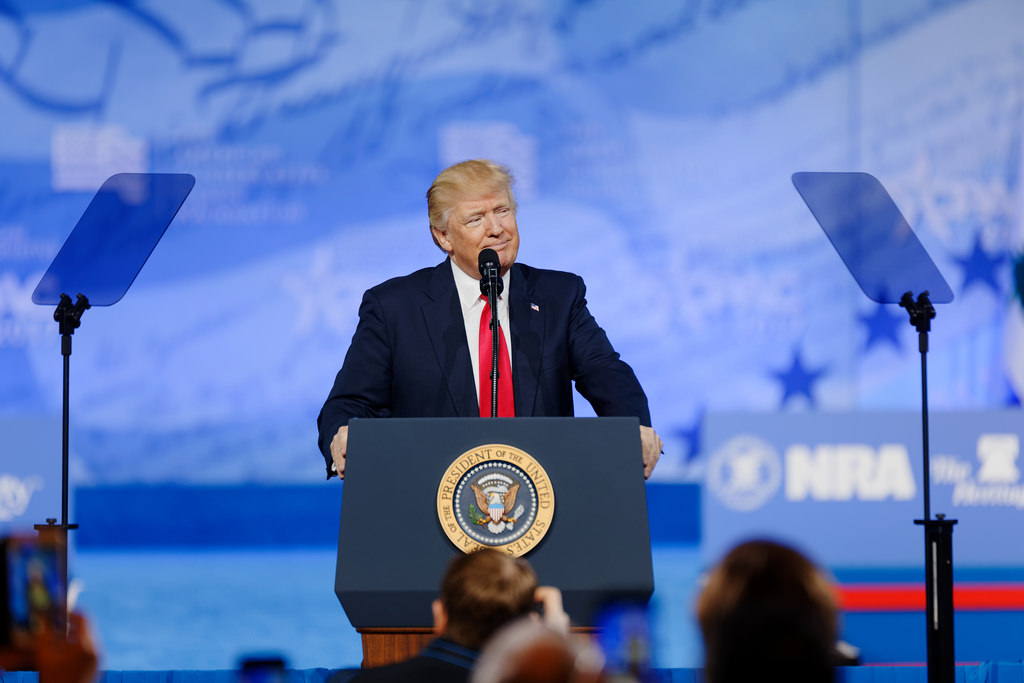
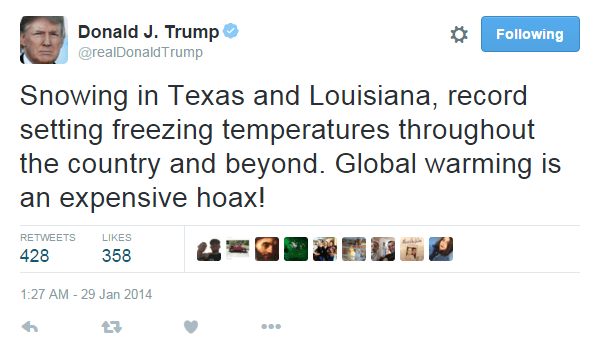
The voices of the minority are louder than the majority with respect to climate change. Studies have shown that Americans who accept climate change outnumber those who do not by a five to one ratio, but the voices of the climate denying community are amplified by Climate Denier in Chief, President Donald J. Trump.¹ Unsupported claims that climate change is a “hoax” are more widely heard than research supported findings stating that climate change is indeed happening and that human fossil fuel emissions are a leading cause.

If the solution depended on sheer numbers of believers versus disbelievers then we would not need to be worried, but the reality is much more complicated than that. It is not simply a matter of believing in the scientific evidence, data, and models that show the effects of human fossil fuel consumption on the earth and its climate, it is about believing that there is something to be done about it. A recent study conducted by Yale University’s School of Forestry and Environmental Studies revealed that only six percent of Americans believe that nations can and will be able to successfully take action to combat climate change.¹ Is this due to to a lack of faith in our world leaders? If so, why aren’t the climate believers electing progressive chiefs into office?

donald2

The same Yale study revealed that Americans are linking climate change to extreme weather events, such as hurricanes Harvey and Florence, at higher rates. Of those surveyed, six in ten said they believed that climate change was having an effect on weather in the United States, four in ten said they had personally experienced the effect of those changes.¹ If these numbers provide an accurate representation of the American public, why then are we seeing an increasing divisiveness on the issue of climate change? Is it still a topic that needs to be debated, despite the overwhelming amount of evidence that demands we take action now? Or do we need another major catastrophe to strike a beloved American city to serve as a wake up call?

Will our denial of information, data, and trends continue to get us into troubles like hurricanes Harvey and Florence? Perhaps. Or perhaps the impending damage of our ignorant decisions is much greater than any flood or hurricane we could ever predict. Nonetheless, climate change is not stopping for anyone, and our sense of urgency needs to catch up with the rates at which devastation is striking our country and planet. Science will continue to reveal time and again that there are proactive steps to be taken to prevent catastrophes, we simply need to learn to listen. 


References

  1. “Americans Who Accept Climate Change Outnumber Those Who Don’t 5 to 1.” Yale E360, Yale School of Forestry and Environmental Studies , 18 Apr. 2018, e360.yale.edu/digest/americans-who-accept-climate-change-outnumber-those-who-dont-5-to-1.
  2. Leefeldt, Ed. “Hurricane Florence Could Be Costliest Storm Ever to Hit the U.S.” CBS News, CBS Interactive, 11 Sept. 2018, http://www.cbsnews.com/news/hurricane-florence-could-be-costliest-hurricane-ever-to-hit-the-u-s/?ftag=CNM-00-10aab4i.
  3. Satija, Neena, and Kiah Collier. “Houston Officials Knew Homes in the Addicks and Barker Reservoirs Could Flood. Why Didn’t Residents?” The Texas Tribune, The Texas Tribune, 12 Oct. 2017, apps.texastribune.org/harvey-reservoirs/?utm_campaign=trib-social&utm_medium=social&utm_source=twitter&utm_content=1507778503.
  4. Schwartz, John, and Richard Fausset. “North Carolina, Warned of Rising Seas, Chose to Favor Development.” The New York Times, The New York Times, 12 Sept. 2018, http://www.nytimes.com/2018/09/12/us/north-carolina-coast-hurricane.html.
  5. “Texas Officials: Hurricane Harvey Death Toll at 82, ‘Mass Casualties Have Absolutely Not Happened’.” The Washington Post, WP Company, 14 Sept. 2017, http://www.washingtonpost.com/national/texas-officials-hurricane-harvey-death-toll-at-82-mass-casualties-have-absolutely-not-happened/2017/09/14/bff3ffea-9975-11e7-87fc-c3f7ee4035c9_story.html?utm_term=.b60838633706.
  6. “’We’re Sitting Ducks’.” ProPublica, ProPublica, 16 Mar. 2016, http://www.propublica.org/article/houston-ship-channel-hurricane-risk-photo-essay.